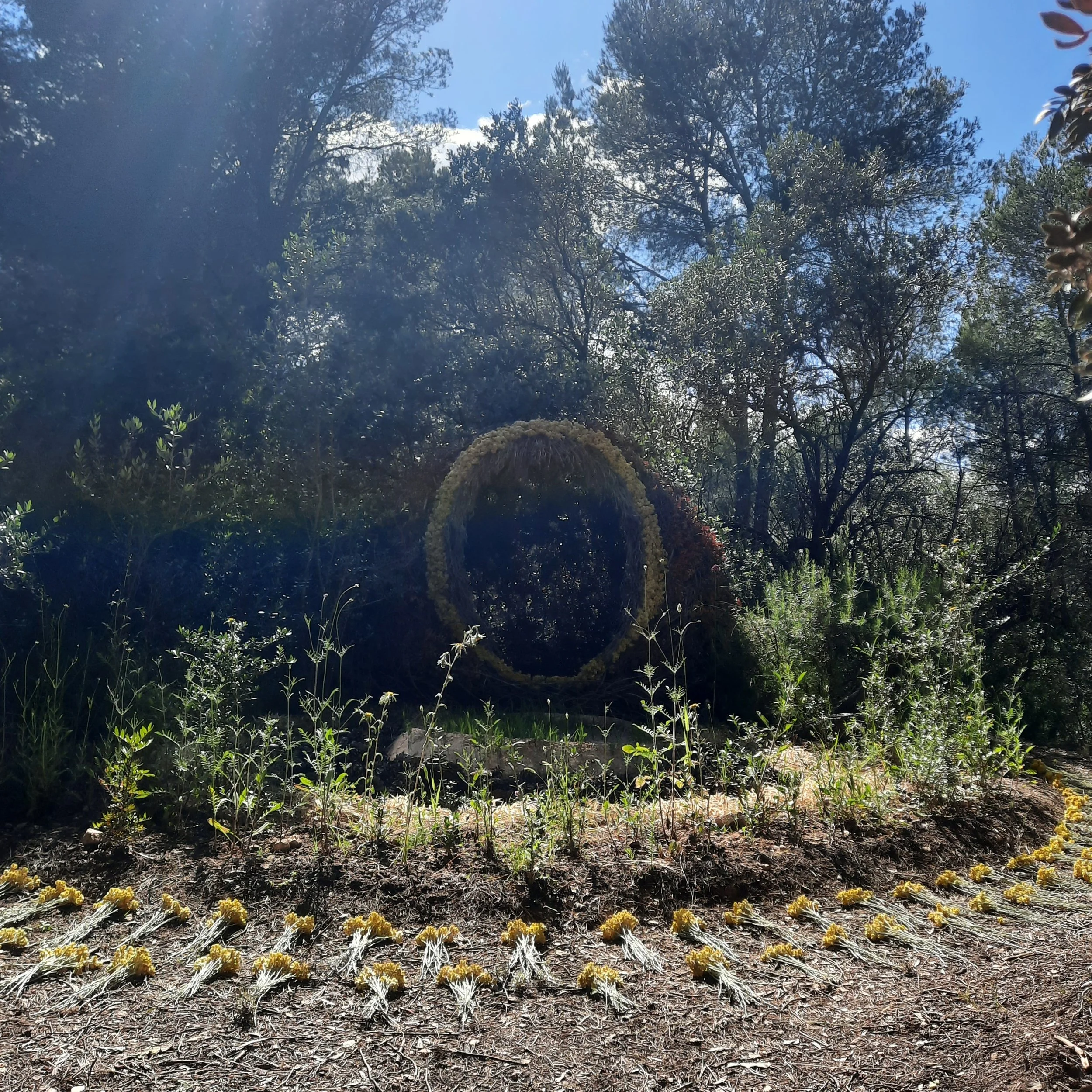
Casanova del Bosque
Built through annual returns to the same woodland.
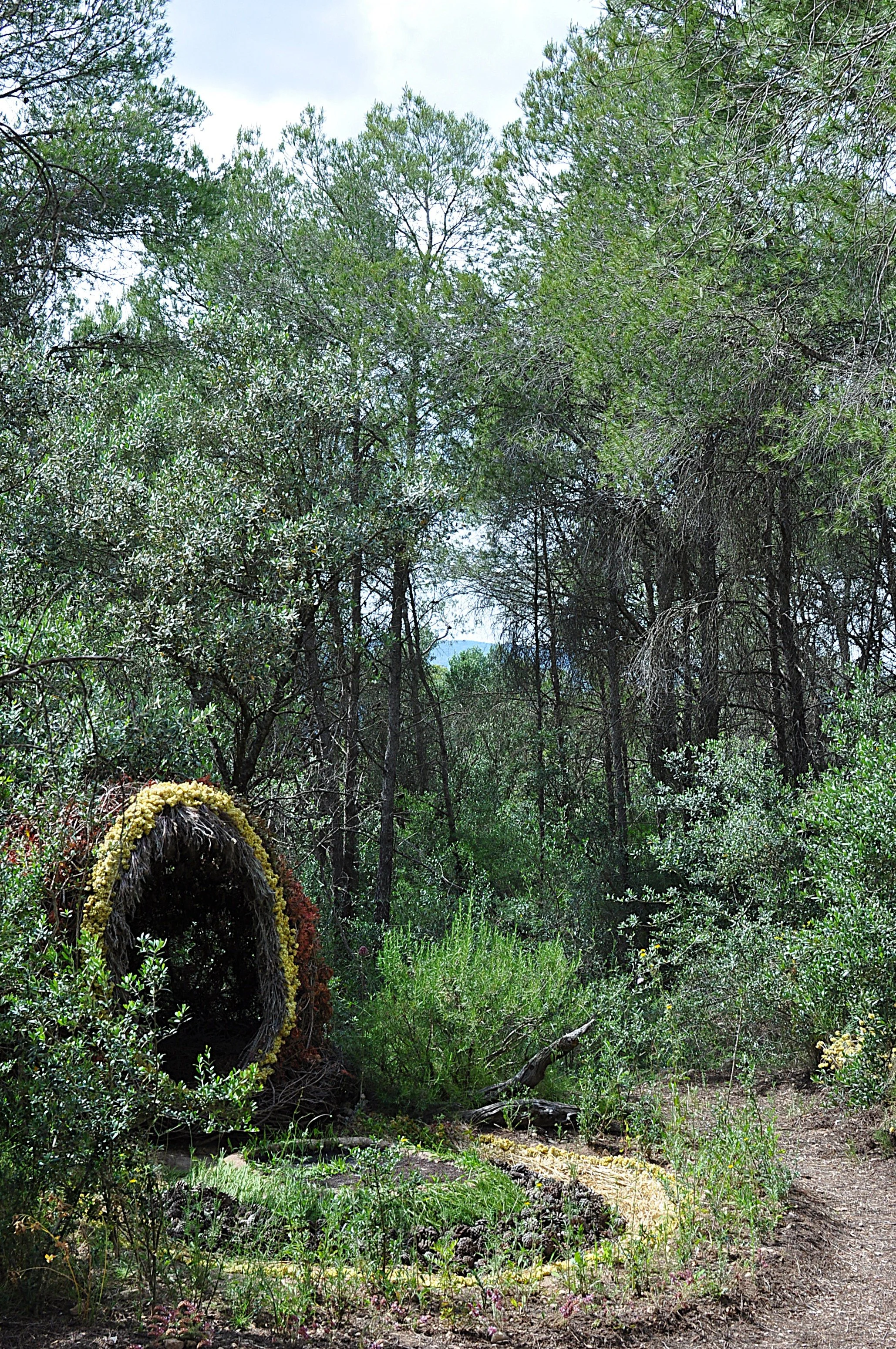
Casanova del Bosque 2026
Making the Nest 2021
Casanova del Bosque is a living sculpture and evolving habitat built from fallen branches, twigs, grasses, and locally gathered natural materials deep within a Catalan forest.
Inspired by the Vogelkop Bowerbird’s lifelong practice of constructing and refining its courting grounds — a process that can take up to a decade — the work explores devotion, persistence, and the shaping of place through repeated gestures over time.
The project began as a kind of woodland hut, woven from branches and standing as a temporary shelter.
It lasted three years before slowly decomposing.
Returning after the Covid period, I found the structure collapsed back into the forest floor — a natural end that offered a new beginning. Using its remains as a foundation, I rebuilt the work as a nest-like form, shifting the focus toward long-term growth and a planted environment.
Working with the forest’s climate and conditions, I prepare the soil, plant native species, and tend to the ground around the structure, gradually forming a bowerbird-inspired garden. Growth here is slow and vulnerable to heat, drought and the rhythms of the land, yet each season strengthens the evolving relationship between the artwork and its environment.
Weather, wildlife, and the shifting forest continually reshape the piece. Birds, insects and small mammals interact with it; storms collapse and re-arrange it; new growth threads through its framework. The sculpture becomes a shared architecture of care, decay and renewal — part shelter, part ritual space, part collaboration with the woodland itself.
Casanova del Bosque is less an object than an ongoing conversation: a long-term act of tending, adapting and co-existing with a place that is always changing.
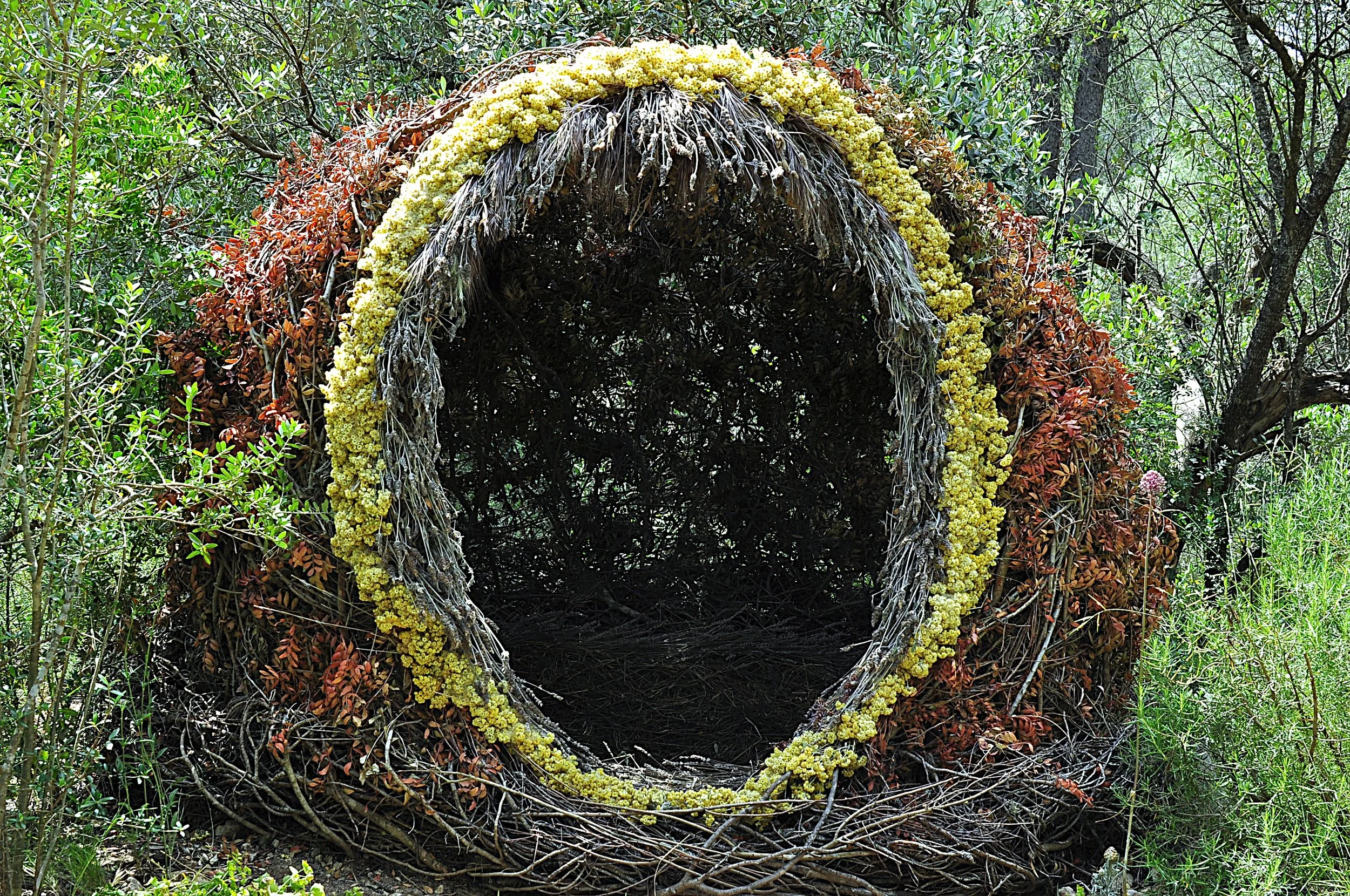
Casanova del Bosque 2026


Wildlife visiting Casanova del Bosque in the Catalonian forest, 2019.